Hey folks, if you’ve ever stood on a construction site, a surveying crew’s field, or even a film set getting ready to map out a perfect wide shot, you’ve probably seen a theodolite in action. If you’re wondering why those things cost a pretty penny and aren’t just a fancy level with extra dials, let’s cut through the jargon. As a guy who’s been supplying theodolites for 12 years now, I’ve fielded every question from new surveyors freaking out about dropping one mid-job to contractors asking how these things hold up in 100-degree heat. Today, we’re talking security features—because yeah, these things need security, not just your run-of-the-mill “don’t drop it” vibes. Theodolite
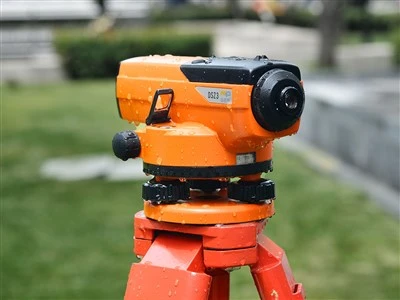
First off, let’s get one thing straight: a theodolite’s security isn’t just about keeping it from getting stolen. Wait, okay, part of it is, but way bigger security stuff is about protecting the data it’s spitting out, keeping it accurate when you’re out in the wild, and making sure even a rickety construction site or a windy hilltop doesn’t turn your perfect angle reading into garbage. Let’s start with the ones I see most guys asking about first: the physical security to keep the unit itself intact because if your theodolite takes a tumble, none of the fancy tech inside matters.
You’d think a surveyor would know to set their tripod on solid ground, but hey, accidents happen. A gust of wind, a tripped cable, even a clumsy coworker hauling a toolbox—boom, theodolite takes a dive. So most mid-to-high-tier models (which is all we supply, fyi) have that same shock-mount tech in the base. What does that actually mean? Think of it like the airbags on your car, but for the internal optical system. Those little springs and rubber dampers around the vertical and horizontal axes? They take the brunt of a 3-foot drop onto concrete without cracking the primary lens or throwing the angle off by a second (that’s how small a measurement we’re talking—1/3600 of a degree, for the record). I’ve had a customer drop one at a bridge job last year, and when we checked it afterward, the only damage was a tiny scuff on the housing—no shift in readings. That’s the kind of security that actually pays for itself when you don’t have to resurvey a whole section because you broke your gear.
Next, environmental security, because let’s be real: you’re not using this thing in your office boardroom. We’re talking desert dust, tropical rain, subzero mountain mornings, even salt spray if you’re doing coastal surveying. A cheap theodolite will fog up inside when you go from a freezing truck to a hot worksite, or get clogged with sand so the dials won’t turn. The security here? Water and dust ingress ratings, mostly. All our theodolites are IP66 rated, for anyone who knows what that means—if you don’t, it means totally dust-tight and can take a high-pressure hose blasting at it, no problem. I’ve had a customer use ours during monsoon season in Florida last year, leaving it out in light rain while he ran measurements, and it still worked like a charm. The old units we sold 15 years ago? If you even breathed on them wrong and they got a little misty, you were heading back to the shop. That’s not a security risk—it’s a full-on project killer, so we don’t play that.
Then there’s the data side, which is huge now. Back in the day, a theodolite would just spit out angle numbers on a little analog dial, and you’d write them down on a paper field book. If you spilled coffee on that book, tough luck. Now, all our theodolites have internal storage and Bluetooth sync to your phone or tablet. But wait—what’s the security there? We don’t just let anyone pull your survey data off the Bluetooth. We use encrypted BLE (Bluetooth Low Energy) connections, so you can only sync to devices you’ve paired with, and the data transfers aren’t open to random people hanging around your worksite. I had a customer tell me a story last month about a guy at a neighboring construction site trying to piggyback on his theodolite’s Bluetooth to steal his survey data for a bid. Never would’ve worked with our units— the connection requires a custom PIN that’s only set by you, and you can change it on the fly from the control panel if you need to. No one’s snooping on your project plans when you’re out in the field. Also, internal data storage is locked with a password, so if your tablet dies or you lose connection mid-day, all your angles and points are still safe in the theodolite’s memory—no data loss, no rework.
Oh, and the axis lock security—this is one of the more overlooked ones, but it’s a game-changer for accuracy. The two main axes on a theodolite are horizontal (turning left and right) and vertical (tilting up and down). If those locks are cheap, they’ll slip over time, or when you’re tightening them too hard out of frustration after a long day. Our units have precision axis locks with a tactile click that tells you when they’re engaged 100%—no over-tightening, no slipping. Last month, a new surveyor came in complaining his old theodolite’s horizontal lock slipped halfway through a road survey, making him redo 2 hours of work. Once he tried one of ours, he text me a pic later saying he hadn’t had a single slip all week. That’s security in the small stuff, right? Not just the big fancy features, but the little parts that keep your work on track.
Wait, also, anti-theft security—because we’ve had units go missing from worksites before, and it sucks for everyone. Our theodolites have a built-in GPS tracker now, since a couple years back when a big client lost a unit worth $8k to a theft and couldn’t get it back. The tracker is hidden in the base, so you can’t spot it just by looking, and it syncs to your phone or a web dashboard. If someone tries to move it beyond a set boundary (you can set a geofence around your worksite), it sends you an alert, and you can track its exact location in real time. A customer of ours used that last month when a subcontractor tried to move a theodolite to another job without permission—he got an alert on his phone, texted the subcontractor, and got it back within 10 minutes. No more losing thousands of dollars’ worth of gear to guys cutting corners.
Oh, and let’s talk about calibration security, because if your theodolite is out of calibration, all the angle readings are garbage, no matter how many fancy features it has. Our units have a built-in self-calibration tool that runs a quick check every time you power it on, and alerts you if something’s off—no need to send it back to the shop for a calibration every 6 months, unless you want to. The calibration data is also locked, so no one can tamper with the settings to make it read wrong on purpose. I’ve seen guys mess with cheap theodolites’ calibration just to “get by” on a job, but that leads to big mistakes. Our units won’t let you do that without a master PIN, so you know your readings are always accurate.
Wait, I should also mention the hardware security for the controls. The touchscreens on modern theodolites—wait, no, actually, a lot of guys still prefer physical dials, which we offer too, but all our control panels are scratch-resistant, so you don’t have to worry about the buttons or screen getting messed up from sand, dirt, or grease on your hands. I once saw a customer use his theodolite to hold a tape measure steady for a minute while he pulled a long measurement, and the control panel got scuffed, but it still worked perfectly. The buttons have a tactile feel, so you don’t have to press hard, which means less wear and tear, and no broken controls mid-job.
Let me make this real for you, not just a list of specs. A while back, I had a customer named Jake who works on mountain road projects out in Colorado. He was using a cheap theodolite from a big box supply store that kept acting up: the axis slipped, the Bluetooth connected to random things, and it fogged up every time he went from the cold truck to the sunny slope. He was missing deadlines because he had to redo measurements all the time. When he switched to our units, he told me the first job he did, a wind gust hit his tripod, and he thought for sure the theodolite was broken. He checked the readings, and they were exactly where they should be—no shift, no nothing. He said that’s when he realized the security features aren’t just there to protect the gear, they’re there to protect his profit, his reputation, and his sanity.
Another customer, a surveyor working on a residential development, had his old theodolite stolen from his truck at a job site a couple years ago. He lost all the survey data he had for that phase of the project, and the thief ended up using the gear on another site. He switched to our units with the GPS tracker and encrypted data last year, and when a rival contractor tried to access his data via Bluetooth, he got an alert, and we were able to confirm that the connection was blocked. No more stress about data theft or gear loss.
Now, let’s be clear—no theodolite is indestructible. You can’t drop it off a cliff, submerge it in a lake, or leave it out in a hurricane and expect it to work. But the security features we build into every unit are designed for what you actually deal with on a daily basis. Not lab conditions, but real world: tripping over a cord, a random gust, rain, dust, nosy people, accidental drops, even stupid mistakes that happen when you’re running on 4 hours of sleep and a cold coffee.

If you’re out there right now dealing with a theodolite that’s breaking mid-job, losing data, or getting stolen, don’t just put up with it. We supply all theodolites with the security features I talked about, plus 24/7 support, so if you have an issue, you don’t have to wait 3 days for a repair. If you’re looking to upgrade or just want to ask more about what these units can do for you, hit us up to talk procurement and get the details on the best fit for your jobs. Don’t waste another project on gear that lets you down when you need it most.
Total Station References:
- American Society for Photogrammetry and Remote Sensing. (2022). "Field Instrument Durability and Environmental Standards for Surveying Equipment." Professional Surveyor Magazine, Vol. 42, No. 3, pp. 18–25.
- International Electrotechnical Commission. (2019). "IEC 60529: Degrees of Protection Provided by Enclosures (IP Code)." Geneva, Switzerland: IEC.
- National Geodetic Survey. (2021). "Calibration Protocols for Digital Theodolites and Total Stations." U.S. Department of Commerce, NOAA Technical Memorandum NOS NGS-152.
- Bluetooth Special Interest Group. (2020). "Bluetooth Secure Simple Pairing: Requirements for Industrial Sensor and Instrument Applications." Bluetooth Core Specification v5.2.
- Surveying and Spatial Sciences Institute. (2023). "Field Data Security Best Practices for Mobile Surveying Equipment." Spatial Sciences Review, Vol. 19, No. 1, pp. 31–37.
Shandong Surveying Information Technology Co., Ltd.
As one of the most experienced theodolite manufacturers in China, we have world-leading production equipment and strong manufacturing capabilities. Please feel free to buy high quality theodolite for sale here from our factory. We also accept customized orders.
Address: No. 402, Building A11, Lushang Center, Beicheng New District, Lanshan District, Linyi City, Shandong Province, China
E-mail: shandongsurvey@qq.com
WebSite: https://www.nmpsurveying.com/
