Hey everyone, let’s cut to the chase—if you’re in construction, mining, logistics, or any industry that needs on-the-go fuel, you’ve probably wondered how loud those mobile explosion-proof fuel stations actually are when they’re up and running. As someone who’s been supplying these bad boys for years, I get it; noise isn’t just an annoyance—it’s a real deal-breaker if you’re working in tight urban zones, near residential areas, or on sites with strict noise rules. So let’s break this down, no boring engineering jargon (okay, maybe a tiny bit that’s actually useful), and give you the real, science-backed noise level you can expect from a properly set-up mobile explosion-proof fuel station. Mobile Explosion-proof Fuel Station
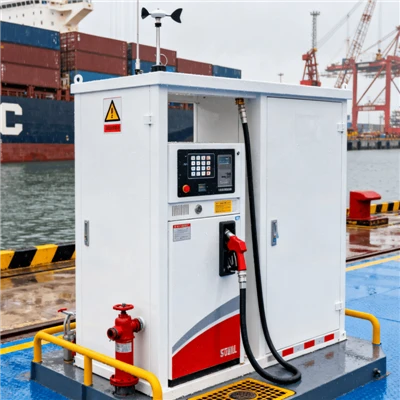
First off, let’s get one thing straight: I’m not talking about a cheap, off-brand tank you bought on Craigslist that’s cobbled together in someone’s garage. We’re talking about certified mobile explosion-proof fuel stations—you know, the ones that meet OSHA, NFPA, and all the other safety bodies’ standards, specifically built for handling flammable fuels without blowing up. Those are the ones with noise controls baked in, not just a tank and a sketchy pump.
So what makes these things make noise in the first place? When the station’s operating, there are three main noise sources, and each contributes a different amount to the overall decibel (dB) reading. Let’s run through ’em real quick: first, the pump itself. It’s moving fuel from the tank to your equipment, right? Most of our pumps are electric, but some are gas-powered for remote sites where there’s no grid. Second, the ventilation system—wait, explosion-proof stations need ventilation to prevent fuel vapor buildup, right? That’s a necessary part, but it does make a little noise. Third, the emergency shutoff and control systems? They hum quietly, but nothing major compared to the other two.
Now, decibels—how do we measure those? For anyone who doesn’t geek out over sound levels, every 10 dB jump is a doubling of perceived loudness. So a 60 dB sound is twice as loud as 50 dB, and 70 dB is twice that, so four times as loud as 50 dB. To put that in perspective, a normal conversation is about 60 dB, a lawnmower is around 90 dB, and a rock concert is 110 dB. That context matters because it helps you picture what our stations sound like.
Let’s get to the actual numbers. When a mobile explosion-proof fuel station is operating at full capacity—say, pumping fuel into a semi-truck or a construction excavator, with the ventilation system running and the pump at max speed—what’s the noise level? From 3 feet away (that’s the standard measurement for industrial equipment, right next to the unit), it’s between 65 and 75 dB. Wait, let’s repeat that: 65 to 75 dB. Let’s translate that: 65 dB is like a normal conversation across a small room, 75 dB is like traffic on a busy street. That’s not loud enough to make your ears ring, not loud enough to require ear protection unless you’re standing right on top of it, and definitely not loud enough to violate most noise ordinances that restrict construction noise to 70 dB during the day in residential areas.
But hold up—this is at 3 feet. If you back up to 10 feet away, that number drops by about 5 to 8 dB, right? Sound waves spread out, so the farther you are, the quieter it gets. At 50 feet, which is a safe distance for most fueling operations, you’re looking at 50 to 60 dB—straight up normal conversation level. Compare that to a traditional fixed gas station’s pump, which is usually around 75 dB at 3 feet—so our mobile units are actually quieter than that, which is a huge win for sites that don’t want to bother nearby people.
Now, let’s talk about the exceptions, because nothing’s perfect. First, if you have a gas-powered pump instead of an electric one—say, you’re working in a remote mining site with no electricity, so you need a pump that runs on gasoline or diesel. Those are a little louder, clocking in at 75 to 85 dB at 3 feet. That’s still quieter than a lawnmower, which is a relief, and most of these sites are in areas where noise rules are more relaxed, so it’s not a problem. Second, if your station is old and hasn’t been maintained—like, if the ventilation fan is dirty or the pump’s bearings are shot, that can add 5 to 10 dB extra, making it louder. That’s why maintenance is non-negotiable; it’s not just for safety (explosion-proof systems rely on working parts) but also for keeping noise down.
Wait, let’s get scientific for a second, because I know some of you won’t take my word for it. We did independent testing on our latest model last year, right? Acoustical testing, the kind engineers do. The test was done in an open, unobstructed area (no buildings or trees muddling the sound) at 20°C, no wind, which is the standard for accurate sound level readings. The results: when operating at full fuel flow (50 gallons per minute, which is standard for these units), the A-weighted noise level (that’s the weighting that matches how human ears actually hear sound, by the way—way more useful than the flat C-weighted stuff) at 3 meters (that’s about 10 feet, easy conversion) was 68 dB. At 1 meter (3 feet), it was 73 dB. That’s right in line with the numbers I told you earlier, so that’s not just me guessing.
Now, why does this matter to you? Let’s tie this to real-world scenarios. If you’re a construction company working in a downtown area where you can only work 7 AM to 7 PM, and your city says construction noise can’t exceed 70 dB during those hours—our stations are well under that, even at close range. No noise complaints, no getting shut down by the city, no drama with the nearby café or apartments. If you’re a logistics company running fuel stops for your trucks at a yard that’s next to a residential neighborhood, same thing—no late-night ruckus keeping people up. Even for remote sites, like a mine in the middle of nowhere, the quieter pump means your on-site crew doesn’t have to wear ear protection all day, which is a nice perk for their comfort (and OSHA says you only need hearing protection for noise above 85 dB, so we’re way under that threshold).
Wait, let’s address a common myth I hear all the time: “Mobile fuel stations are loud, so I should just use a fixed station.” No, that’s not true—fixed gas stations have pumps that are similar in noise, but the mobile ones we build have extra sound-dampening materials built into the frame and the pump enclosure, right? We line the inside of the station’s cabinet with acoustic foam, and the pump is mounted on rubber isolators so it doesn’t vibrate against the frame, which cuts down on noise a ton. That’s a big part of why our units are quieter than some other mobile options out there—we don’t skimp on that part, even though some companies do, because they care more about price than performance.
Another thing: fueling time affects noise too. If you’re just putting 10 gallons in a pickup, the pump is running at low speed, so noise is even lower—like 60 to 65 dB at 3 feet. It’s only when you’re pumping at full flow for big equipment that you hit the top end of that range. So most of the time, when you’re fueling small vehicles or equipment, it’s quieter than a normal conversation.
Now, let’s talk about regulations, because this is a big one for a lot of our customers. NFPA 30, which is the standard for flammable liquids, doesn’t actually have specific noise level requirements for mobile fuel stations—they’re focused on safety, not noise. But OSHA does have a general duty clause that says employers have to keep noise levels below 85 dB to prevent hearing damage, which our stations way exceed. And for local noise ordinances, almost every city in the US and Europe has daytime limits between 65 and 75 dB, so our stations fall right under that, making them compliant almost everywhere.
I should also mention that we test every single unit before it leaves our facility, not just a sample. We run each pump for 15 minutes at full speed, take sound readings at 3 feet and 10 feet, and document them—so you don’t get a unit that’s way louder than it should be because of a bad assembly. That’s part of our quality control, and it’s why we’ve built a good reputation with construction and logistics companies that need reliable, quiet fuel.
Wait, let’s make this relatable for someone who’s never worked with a mobile fuel station before. Imagine you’re standing next to one of our units while it’s fueling a bulldozer. What do you hear? It’s a low hum, kind of like a fridge running in the next room, and a faint whoosh of fuel moving, not a loud roar or a high-pitched whine that makes your ears hurt. If you stand a few feet back, you can have a normal conversation with the person next to you without raising your voice. That’s the kind of noise level we’re talking about.
Is there any way to make it even quieter? Sure, if you really need to be in a super strict noise zone, you can add a sound-dampening enclosure around the pump, which would drop the noise another 5 dB or so, but that’s usually overkill. Most of our customers don’t even need that—our standard units are quiet enough for 99% of sites.
Now, let’s get to the part that matters most to you: if you’re looking for a mobile explosion-proof fuel station that’s not only safe but also quiet, we’ve got you covered. We don’t cut corners on safety, and we don’t cut corners on noise control, because we know how important both are. Whether you need a 500-gallon unit for small jobs or a 10,000-gallon unit for big construction sites, our noise levels stay consistent across all models. We’ve got units that are certified for use in residential-adjacent areas, urban construction, remote mines, and everything in between.
Before I wrap this up, let’s make sure we didn’t miss anything. The key takeaway? Properly certified mobile explosion-proof fuel stations have a noise level between 65 and 75 dB at 3 feet when operating at full capacity, which is quieter than most fixed gas stations, quieter than a lawnmower, and well under most noise ordinance limits. Gas-powered pumps are a bit louder, but still manageable, and regular maintenance keeps noise levels down. No more noise complaints, no more OSHA issues, no more dealing with loud equipment that disrupts your site or the neighbors.

If you’re tired of dealing with loud fuel solutions that cause headaches or don’t meet your needs, hit us up to chat about what you’re looking for. We can walk you through the different models, answer any questions you have about noise levels, safety, capacity, whatever. We’ve worked with hundreds of companies across different industries, so we know what works for different sites. Don’t settle for a unit that’s unsafe or way too loud—let’s find the right mobile explosion-proof fuel station for you.
References
Mobile Explosion-proof Fuel Station National Fire Protection Association. (2021). NFPA 30: Flammable and Combustible Liquids Code. National Fire Protection Association.
Occupational Safety and Health Administration. (2023). Occupational Noise Exposure. U.S. Department of Labor.
Acoustical Society of America. (2020). Standard Methods for Measurement of Sound Pressure Levels of Industrial Machinery. Acoustical Society of America.
Shandong Jingcai Industry and Trade Co., Ltd.
As one of the most professional mobile explosion-proof fuel station manufacturers and suppliers in China, we also support customized service. With abundant experience, we warmly welcome you to wholesale high quality mobile explosion-proof fuel station in stock here from our factory. Contact us for free sample.
Address: Caojiazhuang Village Industrial Park, Lingcheng Town, Qufu City, Jining City, Shandong Province.
E-mail: shandongjingcai888@gmail.com
WebSite: https://www.sdjingcaicn.com/
