Hey there! If you’re anyone in manufacturing, construction, or even logistics, you know industrial components are the unsung heroes keeping your whole operation running—no fancy headlines, just reliable, day-in-day-out work. But here’s the thing: those parts aren’t just made to fit; they’ve got to be safe, too. As someone who’s spent years supplying industrial components, I’ve seen firsthand how skipping the safety checks on a single part (a faulty valve, a misrated bolt) can spiral into way bigger headaches—like production halts, workplace injuries, or even OSHA fines. That’s why, when I’m sourcing or delivering parts for my clients, I don’t just go by “it looks like the right part.” I stick to a set of non-negotiable safety requirements that every industrial component needs to check off, no exceptions. Industrial Components
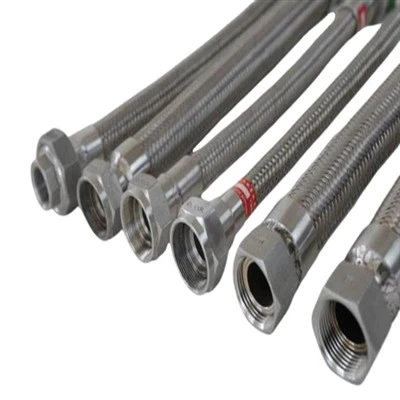
First up, let’s talk about material integrity, because a part is only as strong as the stuff it’s made from. A lot of people miss this, but industrial components operate in brutal conditions: extreme heat, freezing cold, corrosive chemicals, heavy pressure, even UV exposure if they’re used outdoors. For example, a hydraulic hose meant for a construction crane needs to handle high pressure and exposure to oil and dirt, right? If it’s made with a cheap rubber blend that breaks down after six months, that’s a ticking time bomb. What I require from my suppliers here is traceable material certifications—like mill test reports (MTRs) for metal parts, which tell you exactly the alloy, tensile strength, and corrosion resistance of what you’re holding. No MTR? No part. I also do spot checks sometimes, like sending samples to a third-party lab to confirm the specs match what the certs say. Last year, a client of mine almost used a batch of structural steel bolts that came with fudged MTRs; a quick hardness test caught that they were 20% weaker than claimed. Saved him from a bridge project delay that would’ve cost tens of thousands. That’s the kind of detail that matters.
Next, load and pressure rating verification. This is make-or-break for parts that handle weight or force—think gears, fasteners, pressure vessels, conveyor belts. Every industrial component has a maximum load it can handle before it fails, and you can’t just guess that. I remember a newbie at a plant who replaced a 10,000-lb-rated bolt with a 8,000-lb one because it “looked the same” and was cheaper. That bolt snapped during a heavy lift, taking out a forklift, damaging a product, and giving a worker a minor bruise. It was a mess that could’ve been avoided with a simple check of the part’s stamped rating. Now, I make sure every component I supply has a clearly marked, permanent rating—stamped on the part, not just a paper label that can fall off. For pressure parts (like pipe fittings), I confirm they’re tested to the exact operating pressure of their intended use; a fitting rated for 150 PSI can’t go on a line that runs 200 PSI, no matter how “close” it is. I also require documentation of that testing—hydrostatic tests for pressure parts, load tests for fasteners, all logged so you can prove compliance if OSHA comes knocking.
Then there’s design and dimensional accuracy. A part might have the right material and rating, but if it’s the wrong size or has a wonky shape, it won’t fit right, and that’s where safety risks start. I once got a call from a packaging plant where a batch of conveyor rollers I’d supplied were 0.5mm too narrow for their frame. They forced them in, which caused the conveyor to jam, and when a worker tried to clear the jam, their glove got caught, leading to a laceration. The root issue? The supplier rushed the design and skipped the tolerance checks. Now, I demand that every component’s dimensions meet ISO or ASME standards, depending on the industry. For custom parts, I work with engineers to draw up exact tolerances, and I use coordinate measuring machines (CMMs) to check every batch before it ships. Even off-the-shelf parts—like electrical connectors or pipe couplings—need to match the exact industry specs so they don’t cause misalignment, electrical shorts, or leaks. Bad fit doesn’t just waste time; it creates safety hazards that no production schedule can afford.
Electrical components are a whole other bag of safety needs. If you’re dealing with industrial motors, switches, wiring, or control panels, electrical safety is non-negotiable. I can’t tell you how many times I’ve seen a cheaply made switch that doesn’t have proper insulation, leading to shock risks, or wiring that’s not rated for the voltage it’s carrying. For electrical parts, I only supply ones that are UL-listed (in the US) or have equivalent international certifications—CE marks for EU, CSA for Canada. That means they’ve been tested for things like overload protection, insulation resistance, and fire resistance. Last year, a small manufacturer almost installed a non-UL-rated control panel I almost accidentally included in a shipment; I caught it when I checked the certs. That panel would’ve overheated in a month, potentially sparking a factory fire. Electrical safety isn’t something to cut corners on, and neither should I when vetting parts.
Corrosion and environmental resistance is another big one, especially for parts used outdoors, in marine settings, or near chemical plants. A part that rusts through in a year is not just a waste of money—it’s a safety hazard. For example, a metal bracket on a wind turbine that corrodes could cause a blade to loosen, which is a huge risk for workers and equipment. I require parts that will be exposed to moisture or chemicals to have the right coating: galvanization for steel parts, powder coating, or even specialized coatings for chemical exposure. For marine parts, I make sure they’re made with marine-grade stainless steel, which is resistant to saltwater corrosion. I also check the salt spray test results for those parts—they should pass at least 500 hours of salt spray without significant rust. No one wants to replace a critical part every 12 months; that’s costly and risky, so I only supply parts that hold up in their specific environment.
Compliance with industry-specific regulations. Different sectors have their own rules, and you can’t just use a generic part for a niche industry. For example, parts used in food and beverage processing (like conveyor belts, valves, or seals) need to be FDA-compliant, meaning they don’t leach chemicals into food. Mining equipment parts have to meet MSHA (Mine Safety and Health Administration) standards, which are stricter for things like dust resistance and structural integrity. Construction parts have to comply with OSHA’s steel erection and concrete forming standards. As a supplier, I make sure every part I send has the right regulatory documentation—no cutting corners to save a buck. If a client is in food manufacturing, I don’t just grab any rubber hose; I grab one that’s listed as FDA-approved for food contact. If they’re in mining, I confirm the part is MSHA-certified. Skipping this means not just regulatory fines, but parts that don’t work in their specific environment, leading to safety issues.
Lastly, traceability and post-delivery support. Wait, traceability isn’t just for recalls—it’s for safety. If a part fails, you need to be able to track where it came from, when it was made, what tests it passed. I give every component a unique batch number, and my clients can look up all the docs (MTRs, test results, certs) for that batch online. Plus, I don’t just drop a box of parts and disappear. I’m here if a client has a question about installation, or if they run into an issue. Last quarter, a client had a pressure valve start leaking after three months; I helped them diagnose it was a misalignment during installation, not a faulty part, and walked them through fixing it. That kind of support goes a long way in keeping their operations safe.

Now, let’s be real—this all sounds like a lot, but it’s worth it. As someone who’s in the industrial components game, my reputation lives and dies by the safety of the parts I supply. I’ve seen the mistakes people make when they skip these checks, and I never want my clients to go through that. If you’re a plant manager, maintenance lead, or someone who needs reliable industrial components, don’t just go for the cheapest option. Ask for the MTRs, check the ratings, confirm the certifications. And if you’re not sure what to look for, or you need a supplier that’s got your back on all these safety checks, reach out to talk through your needs. We can go over exactly what safety requirements your specific application needs, so you can keep your operations running smoothly and safely.
Industrial Components References:
- OSHA. (2023). Safety Standards for Industrial Machinery and Components. U.S. Department of Labor.
- International Organization for Standardization (ISO). (2022). ISO 9001:2015 Quality Management Systems for Industrial Parts. ISO.
- Underwriters Laboratories (UL). (2024). UL 508 Standard for Industrial Control Panels. UL LLC.
- National Fire Protection Association (NFPA). (2023). NFPA 70: National Electrical Code (NEC) for Industrial Wiring. NFPA.
- American Society of Mechanical Engineers (ASME). (2022). ASME B31 Pressure Piping Code. ASME International.
Hengshui Minai Rubber & Plastic Technology Co., Ltd.
Hengshui Minai Rubber & Plastic Technology Co., Ltd. is one of the most professional industrial components manufacturers and suppliers in China, featured by quality products and good price. If you’re going to buy advanced industrial components made in China, welcome to get quotation from our factory. Welcome to contact us for customized service and OEM/ODM service.
Address: West of the Town, Jiangheliu Town, Jing County, Hengshui City, Hebei Province
E-mail: mnrubberseal@outlook.com
WebSite: https://www.mnrubberseal.com/
