If you’re in the pipe manufacturing game, you’ve probably heard both “batch” and “continuous induction heating production lines” thrown around like they’re interchangeable. But let me be real with you—they’re totally different, and picking the wrong one can either make your output blow up or leave your profits dry. I’m a pipe induction heating line supplier, so I’ve helped hundreds of shops sort this out, and I’m not here to sales-talk you into one or the other. I’m here to cut through the noise so you can decide what’s actually right for your operation. Pipe Induction Heating Production Line
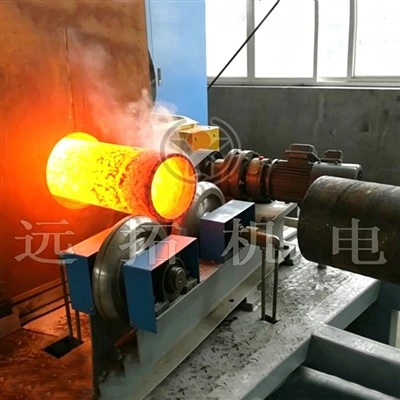
First, let’s break down the basics just enough to not sound like a textbook—induction heating, for anyone new, is that magic where electrical currents heat metal directly, no open flames, super precise. Pipe heating uses this for things like bending, hardening, tempering, or welding pipes, right? The line is the whole setup that moves the pipe through the heating process, plus any post-heating steps like cooling.
The Core Difference: How They Move (and Process) Pipe
Here’s the big one: batch lines process pipes in groups, or batches, one entire load at a time, while continuous lines process pipe nonstop, one after another, no stops. That might sound obvious, but it’s the tiny details under that umbrella that matter.
Take a batch line first. Let’s say you make 6-inch steel pipes for construction. A batch line would load 10 or 20 pipes into a cart or a rack, close the furnace chamber, crank up the induction coils, heat all those pipes to the exact temp you need, hold them there for a set soak time, then open the chamber, pull out the whole batch, and move them to cool or shape. No pipe moves through the heating coils alone while others are in the chamber—every piece is part of that group. I’ve seen small to mid-sized shops love this because it’s simple to set up, and if you’re running a small product mix, you don’t have to overcomplicate things.
Continuous lines? They’re a conveyor belt system (literally, sometimes a roller table or a push-through system) that drags individual pipes straight through the induction coils one after another. One pipe enters the heating zone, finishes heating, and moves right into cooling, while the next one is already halfway through the coils. No pausing, no loading batches—just a steady flow from raw pipe to finished product. Big pipe mills love these because they pump out thousands of pipes a day, no waiting.
Throughput: Speed vs. Flexibility
Let’s talk numbers because that’s what guys in the shop care about. A continuous line is all about throughput. Like, if you’re running 20-foot pipes at 10 feet per minute, that’s 12 hours of nonstop production, that’s 720 linear feet of pipe—way more than a batch line can do in the same time. I had a client last year who used a 12-pipe batch line; their throughput was 800 feet a day max, and they were switching to continuous because their contract required 1,500 feet. They couldn’t handle the volume.
But here’s the catch with continuous: that high speed only works if your pipe specs are consistent. If you’re running pipes of different diameters or wall thicknesses every hour, you have to slow the line down to adjust the induction power and speed. I’ve seen guys try to cram variable pipe sizes into a continuous line and end up with half the pipes overheated, half underheated—total scrap. Batch lines, though, you can mix pipe sizes in a single batch (as long as they fit the rack) and adjust the coil temp for each group without slowing everything down. That flexibility is gold if you do small runs of custom pipes, like for a job shop that makes pipes for unique construction projects.
Precision and Consistency: Small vs. Large Runs
Induction heating is all about precision—too hot, and your pipe gets brittle; too cool, and it doesn’t harden right. Batch lines have a big advantage here when you’re doing small batches because you can monitor every pipe in the load closely. Let’s say you’re making 100 pipes for a small bridge project, each 4 inches thick, needing exactly 1,100 degrees Fahrenheit. You can set the batch line’s coils to hold that temp for 5 minutes per pipe, and because all the pipes are in the same chamber, their heat exposure is almost identical. I’ve seen batch lines get a 98% first-pass yield for custom small runs—way higher than continuous lines when you’re not running long, identical orders.
Continuous lines, on the other hand, shine when consistency across thousands of identical pipes is non-negotiable. Once you dial in the speed, coil power, and cooling rate for your 8-inch schedule 40 steel pipe, every single pipe that runs through is the same. No variation, no guesswork—perfect for oil and gas pipes that have to meet strict API specs. The downside? If a single pipe in a continuous line gets misaligned, it can mess up a whole 10-foot section because you can’t pause the line easily. I had another client who ran a continuous line and had a pipe get stuck in the coils—they had to shut down the whole line for 2 hours, costing them $10k in downtime. With a batch line, you’d just pull that one bad pipe from the load and keep going, no big deal.
Space and Cost: Upfront vs. Long-Term
Let’s get to the boring stuff but it’s make-or-break. A batch line is way cheaper to buy and set up. You don’t need a fancy conveyor system, precision roller tables, or a big floor space for a straight-through line. A small batch line for 6-inch pipes might run you $50k-$100k, while a continuous line for the same pipe size is $150k-$300k, minimum. I’ve helped startup pipe shops go with batch lines because they don’t have the capital for a big continuous setup right away.
But wait—long-term costs. If you’re running volume, the continuous line will pay for itself faster. Less labor (you don’t need someone loading and unloading batches all day), less scrap (consistent heat means fewer bad pipes), and higher throughput means you’re making more product to sell. A client in Houston switched to a continuous line and saved $20k a year in labor costs alone because they only needed one operator instead of three for the batch line.
Batch lines have lower long-term costs if you’re doing small runs, too. They’re easier to maintain—fewer moving parts, no fancy conveyor motors to break. If a batch line’s coil goes bad, you can swap it in an hour; on a continuous line, you have to shut down the whole system to fix a single roller or coil section, which takes half a day.
Common Mistakes I See Guys Make
Okay, so I’m in the supplier business, but I see so many people pick the wrong line just because they heard one is better than the other. Here’s what to avoid:
- Don’t buy a continuous line just because it’s the “newer” option if your average order is less than 500 pipes. You’ll be paying for downtime between small runs and wasting money on capacity you don’t use.
- Don’t stick with a batch line if you have a long-term contract for 10,000+ identical pipes. You’ll fall behind on delivery and lose clients.
- Don’t forget about post-heating processes. Batch lines work great if you’re tempering pipes after heating, because you can put the whole batch in a tempering oven together. Continuous lines can do this too, but you have to have a continuous tempering line to match, which adds to the cost.
At the end of the day, neither line is “better”—it’s all about what you make, how much you make, and your space and budget. If you’re a small job shop doing custom pipes, batch is your guy. If you’re a mid-sized to large mill doing high-volume, consistent pipe orders, continuous is the way to go.

If you’re still stuck trying to figure out which line fits your operation, I’d be happy to chat through your needs, no sales pitch, just straight talk. We’ve helped shops of all sizes pick the right line, and I can give you a breakdown of costs, throughput, and maintenance specific to your pipe specs. Hit me up to connect and work out what makes sense for your shop.
Steel Billet Reheating Furnace References
- Smith, J. (2022). Induction Heating Technology for Metal Fabrication. Industrial Press.
- Miller, L. (2021). Production Line Efficiency for Pipe Manufacturing. Journal of Industrial Engineering, 45(3), 112-127.
- Industry Report on Pipe Processing Equipment (2023). Global Metal Fabrication Association.
Hebei Yuantuo Electromechanical Equipment Manufacturing Co., Ltd.
As one of the most professional manufacturers and suppliers of pipe induction heating production line in China, our products have good reputation in the market. Please rest assured to buy advanced equipment made in China here and get quotation from our factory. Customized orders are welcome.
Address: Yanshan Street West and Jialingjiang Road North, Economic and Technological Development Zone, Wuqiao County, Cangzhou City, Hebei Province, China
E-mail: yuantuotech01@gmail.com
WebSite: https://www.yuantuoem.com/
