Hey everyone, let’s cut to the chase—if you’re in manufacturing, import/export, or even retail, you’ve probably stood at a crossroads: do you do your own checks (self-inspection) or bring in a third-party inspection service like us? I’ve spent 8 years on the ground doing inspections, talking to factory owners, logistics managers, and brand folks, so I’ve seen both sides up close. Today I’m breaking down the real, unfiltered comparisons—no fancy jargon, just what actually works for your bottom line and your peace of mind. Inspection service
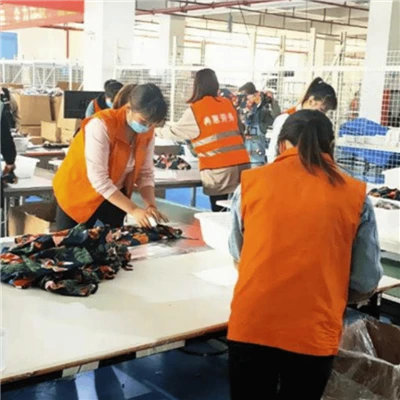
First, let’s get one thing straight: self-inspection isn’t lazy. It’s a go-to for small teams or folks just starting out, right? Maybe you run a 10-person apparel brand, and you pop into the factory down the street once a month. Or you’re a small importer of home goods, so you check a shipment yourself when it arrives at the port. But here’s where people trip up: they assume “we know our products, so our checks are thorough.” Newsflash—most of the time, that’s not true. Let’s talk about the hard stuff: skill gaps. If you make wooden furniture, do your team know the difference between a structural joint that’ll hold for 5 years vs. one that’ll crack in 6 months? We once audited a small furniture brand that did their own checks—they missed that half the chairs had hidden glue gaps, so 20% of their first shipment broke within a week of customers buying them. Costed them $12k in returns and ruined their early reviews. That’s the kind of thing no self-inspection catches unless you’re a specialist.
Then there’s the time suck. Let’s say you’re a factory manager juggling 10 orders. You need to schedule inspections mid-production, at pre-shipment, and before loading. That means pulling your best line workers away from assembly lines, spending 2-3 hours per inspection, cross-referencing specs you might have written down half a year ago. We worked with a toy factory that used to do self-checks: each inspection took 4 hours, so they had one less person on the line 2 days a week. That translated to 150 fewer toys produced monthly. Multiply that by 10 months? That’s $25k in lost revenue right there. Compare that to us—we show up with a team of 2 specialized inspectors, have a pre-filled checklist tailored to toy safety (think CPSC standards, small parts testing), and we’re in and out in 2.5 hours. No downtime for their production.
Now, what about when things go wrong? Self-inspection’s biggest blind spot is bias. If you’re the brand or the factory owner, you don’t want to find a flaw. You might glance over a scratch on a plastic bin because you “don’t want to delay the shipment” or you think “it’s just a small mark, customers won’t notice.” We’ve seen that play out time and again—one food importer did their own checks on snack bars, found 2% of wrappers were misprinted, shrugged it off. When those hit shelves, 3 customers complained about allergens listed incorrectly, which triggered a product recall. That cost them $50k in recall fees and a 12% drop in repeat purchases. We don’t have that bias. We get paid to be hyper-critical, no agenda except making sure your product is right. We’re the neutral third eye.
But wait—don’t write off self-inspection entirely. For very small, low-risk items, it can work. If you’re importing 500 t-shirts from a local factory, and your manager knows fabric quality inside and out, a quick check might be enough. Or if you’re a startup with $5k in total product value, hiring an inspection service might not pencil out cost-wise. But even then, there’s a middle ground—maybe a spot check instead of a full audit, which is cheaper.
Now let’s talk about what inspection services bring to the table that self-checks can’t. First, standardization. We use the same checklists across every order, every factory, every country. If your product is supposed to have a 90% pass rate on seam strength, we test that the same way in China, India, or Mexico. Self-inspection? That checklist might be written once, then adapted differently each time a new person does the check. We also have access to up-to-date regulations. Last year, the EU updated toy safety rules for small parts—we updated our checklists within a week. A factory we worked with that did self-checks didn’t know about the change, so their next shipment got held at customs. Cost them $8k in storage fees and a 3-week delay. That’s the kind of compliance stuff we live and breathe.
Then there’s coverage. If you’re importing a container of 10,000 phone cases, do you check every single one? No, that’s impossible. Self-inspection usually relies on a small sample—like 10 or 20 units. We use statistically valid sampling, per ISO 2859 standards (yes, that’s a real thing, it’s not just a random number). For a 10,000-unit shipment, that’s 125 units to check. We look at every defect type—cosmetic, functional, safety—so if a functional defect is only 3% of the total, we’ll catch it. A client who did self-checks once only looked at 20 cases, missed that 15% had faulty charging ports, had to replace 1,500 units. Ouch.
Cost is a big one, too. A lot of folks think “inspection services are expensive” but let’s do the math. Let’s say a full inspection for a $50k shipment costs $800. If a self-inspection misses a $10k defect? That way cheaper than reworking the entire shipment or doing a recall. Also, we prevent hidden costs—like customs delays, which can add $1000+ a day in storage and demurrage fees. We work with factories to fix issues mid-production, so you don’t have to scrap a whole container. Last quarter, we helped a apparel brand catch faulty zippers 2 weeks before shipment—reworked on-site, no delay, saved them $12k in rework costs.
Now, the downsides of inspection services. First, not all services are created equal. Some cut corners—send a guy who’s not trained, uses a generic checklist instead of your product-specific one. We’ve heard horror stories from clients who used a cheap service, missed mold in food shipments, that led to a recall. Also, if you only use us for pre-shipment checks, we can’t fix issues before they happen. That’s why we recommend combining self-inspection (day-to-day factory checks) with our services (specialized audits, pre-shipment sampling) for a middle ground. One client did that—they had their line managers do daily checks, and we did a mid-production audit. Cut their defect rate by 40% in 6 months.
Another con: for really small orders, like 50 units, it might not make sense. The inspection cost could be more than the order value. That’s when a spot check with a reduced fee works, or even remote checks (we do photo/video checks if you’re on a tiny budget, which is way better than nothing).
Let’s wrap this up with real scenarios, not just numbers. Scenario 1: You’re a small candle brand, importing 2,000 candles for a pop-up. Self-inspection: You drive to the port, check 20 candles, miss that 200 have wicks that are too short, so they burn unevenly. You have to re-wick all of them, lose the pop-up slot, cost $3k. Inspection service: We do pre-shipment checks, test wick length, catch the issue, factory fixes it, no delay, cost $500. Way better. Scenario 2: You’re a furniture brand, importing 100 dining tables, local factory. Self-inspection: Your manager checks 10, notices a scratch, lets it slide. Customer complains when they get it, you refund $500. Inspection service: We check all cosmetic defects, note the scratch, factory polishes it before shipping, no refund needed.
Here’s the thing—there’s no “one size fits all.” If you’re a startup with a $2k order, maybe a self-spot check is fine. If you’re a mid-sized brand with a $50k order, combining your internal checks with our specialized inspections is the sweet spot. If you’re importing food, toys, or any product with strict safety rules? You can’t afford to skip a third-party check.
If you’re wondering what makes a good inspection different from a bad one—we’re the ones who show up with our own calipers for measuring, not relying on the factory’s tools. We don’t make friends with the factory manager; we’re neutral. We send a full report with photos, defect counts, not just a “pass/fail” note. And we don’t do one-size-fits-all checklists—we build yours around your product specs.
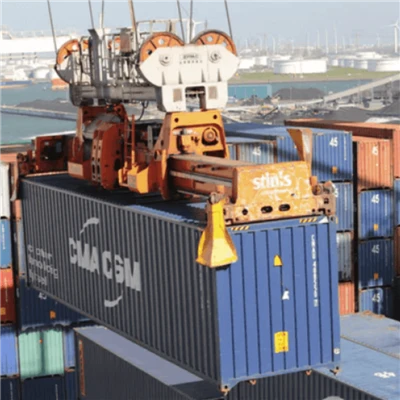
Now, if you’re tired of guessing about your product quality, tired of hidden costs from missed defects, tired of customs delays that kill your sales? Let’s chat. We’ll break down what makes sense for your specific order—no pressure, no hidden fees, just real talk about what will protect your business.
Quality System Audit References:
- ISO 2859-1:2020, Sampling procedures for inspection by attributes — Part 1: Sampling schemes indexed by acceptance quality limit (AQL) for lot-by-lot inspection
- U.S. Consumer Product Safety Commission (CPSC), "General Product Safety Requirements", 2023
- World Trade Organization (WTO), "Trade Facilitation Agreement: Costs of Customs Delays", 2022
- National Association of Manufacturers (NAM), "Manufacturing Downtime Costs and Mitigation Strategies", 2023
Verittek Standards Co., Ltd.
As a professional product quality service provider in China, we help clients improve overall product quality and stability by providing third-party inspection services. If you have any enquiry about cooperation, please feel free to email us.
Address: Room 1002, Building 1, Tian’an Industrial Building, Panyu Energy Saving Technology Park, No.555 North Panyu Avenue, Donghuan Street, Panyu District, Guangzhou City, China.
E-mail: sales@verittek.com
WebSite: https://www.verittek.com/
