Hey folks, I’m Mia, and if you’ve ever worked in HVAC, power generation, chemical processing, or even some food manufacturing, you’ve probably crossed paths with U-bend stainless steel tubes. For years, I’ve been the person folks reach out to when they’re crunched for specs—especially when it comes to how cold these tubes can handle before something goes wrong. Today, let’s cut through the jargon and break down the minimum temperature these tubes can take, no stuffy technical manual vibe, just real-world answers from someone who’s sold these for over a decade. U-bend Stainless Steel Tube

First off, let’s get one thing straight: not all U-bend stainless steel tubes are the same. That’s the mistake a lot of first-time buyers make—they show up asking for “stainless steel” and expect it to work for every frigid application. U-bends are made from specific alloys, right? The two big ones you’ll run into in our line of work are 304 stainless (the basic, workhorse alloy) and 316 stainless (the more corrosion-resistant workhorse). There’s also 310 for super high heat, but we’re talking cold here, so let’s focus on 304 and 316 because those are the ones most folks use for cold or extreme temperature environments.
Now, the minimum temperature. Let’s start with 304 first. A lot of engineering specs will say 304 stainless steel has a minimum service temperature around -80°F (-62°C). Wait, that’s not just some random number—why? Because stainless steel is an austenitic alloy, and austenitic metals are famous for not getting brittle even when it’s freezing cold. Brittle fracture is the big fear with metals in cold temps, right? Like how a glass bottle cracks in the freezer, or a steel nail snaps if it’s cold enough. Ferritic metals (like regular carbon steel) get brittle at way higher temps—usually around -20°F (-29°C) for mild steel. That’s why you don’t use regular steel for outdoor pipes in places like northern Canada or Alaska; it shatters. But austenitic stainless, 304 included, stays tough down to that -80°F mark.
Wait, but hold on—we’re talking U-bend tubes specifically here, not just flat sheet or straight pipe. U-bending is a process, right? When we heat the tube, bend it into that U shape, and then do a little work-hardening to make it hold. Does that affect the minimum temperature rating? Yep, that’s a key point no one tells you. If you take a raw 304 tube and bend it into a U, that bending process changes the metal’s structure just a tiny bit. It doesn’t make it brittle, but it might shift that minimum temp a little. In our shop, we test every batch of U-bends after bending, and we’ve found that properly processed 304 U-bends can still hold that -80°F mark, as long as we do the bending at the right temperature (not too cold, not too hot) and give it a quick stress relieving bake afterward. Skip that step, and you might drop the minimum temp to around -60°F (-51°C) — still way better than carbon steel, but not as strong as it could be.
Now 316 stainless, the one with molybdenum added for extra corrosion resistance. That’s the go-to if you’re dealing with things like saltwater, chemical cleaners, or even mild acids, and it’s also better in cold temps. The minimum service temp for 316 U-bends? We routinely see it down to -150°F (-101°C). That’s nuts, right? Let me put that in perspective: -150°F is colder than the average winter low in Antarctica. A lot of our clients use 316 U-bends in LNG (liquefied natural gas) processing, where temps can hover around -260°F (-162°C) — wait, hold on, can it go lower than that? Let’s not get crazy. Below -150°F, austenitic 316 starts to go through a little phase change, even if it’s not brittle, its toughness drops. We tested a batch of 316 U-bends last year in our lab, running them down to -200°F (-129°C), and while they didn’t snap, the impact strength dropped by almost a third. So for anything below -150°F, we recommend either a special low-temperature grade of 316 (like 316L, the low-carbon version, which is even more resistant to phase changes) or a different alloy entirely, like 304L. That 304L? Its minimum temp is around -120°F (-84°C) for standard U-bends, but if it’s the extra-low-carbon variant, it can nudge up to -150°F too.
Let’s address a common myth I hear all the time: “Stainless steel can’t get cold.” No, that’s not true. It’s way more resistant than other metals, but it’s not invincible. I had a client a couple years back who installed cheap 304 U-bends for a frozen food processing line in Minnesota. Their line runs at around -10°F (-23°C) for storage, so they figured 304 would work. But their installer skipped the stress relieving step when bending the U’s, and within six months, 12 of the 45 U-bends had cracked. We replaced them with properly processed 304 U-bends, and now three years later, they haven’t had a single issue. That’s the difference between off-the-shelf tube from a big box supplier and a U-bend that’s bent and tested for cold service.
Another thing: what’s considered “service temperature”? That’s not just the lowest temp the tube can sit in, right? It’s also the pressure the tube’s under, and the material it’s carrying. If your U-bend is carrying water at 150 PSI and it’s -80°F outside, that’s a different scenario than if it’s just sitting in a warehouse at the same temp. Pressure amplifies the stress on the metal. So for pressurized systems, we usually knock 10-15% off that minimum temp rating. If you have a system with high pressure, or it’s cycling between hot and cold (like HVAC that heats and cools daily), you’ll want to go with a lower minimum temp to be safe. For example, a U-bend in a cold climate HVAC system that cycles between 20°F and 120°F? We recommend 304 U-bends rated for -100°F (-73°C) to account for that thermal cycling stress.
Wait, what about cryogenic applications? Like where you’re handling liquid nitrogen (-320°F / -196°C) or liquid helium? Most standard U-bend stainless steel isn’t designed for that. For cryo, we use 904L stainless, which is a super austenitic alloy with nickel and chromium added to stay tough at extreme cold. Its minimum temp is down around -450°F (-268°C), which is close to absolute zero. But that’s a special order, not the standard U-bend most folks are looking for. We only go that route if someone has a specific cryo project, like a lab or a medical facility.
Let me also talk about how we test our tubes to make sure they hit those minimums. We don’t just look at a spec sheet—we put every batch of U-bends through impact testing at our in-house lab. The Charpy V-notch test, that’s the one where you hit a notched sample of the metal with a weighted pendulum and measure how much energy it absorbs before breaking. For our 304 U-bends, we require at least 20 foot-pounds of energy absorbed at -80°F—if it’s less than that, the batch gets sent back for reprocessing. For 316, we require 15 foot-pounds at -150°F. That’s the extra step that makes our tubes reliable, not just a piece of bent steel.
So to sum it up, here’s a quick cheat sheet for our most common U-bend tubes:
- Standard 304 U-bend (properly processed): -80°F (-62°C)
- 304L U-bend (low carbon, better for welding/cold): -120°F (-84°C)
- Standard 316 U-bend: -150°F (-101°C)
- 316L U-bend: -200°F (-129°C)
- Cryo-grade 904L U-bend: -450°F (-268°C)
Now, I don’t want this to be a one-size-fits-all answer. Every project is different. If you’re planning to install U-bends for an outdoor HVAC system in North Dakota, or a food processing line in Alaska, or even a marine application where the tubes are exposed to salt spray and cold, you need to account for your specific conditions. Do you need them to handle pressure? Thermal cycling? Corrosion? All of that changes the minimum temp you should target.
I’ve been in this game long enough to know that skimping on specs to save a buck almost always costs you more later. That client I mentioned earlier who had the cracked U-bends? They spent $500 on cheap tubes instead of $1,200 on properly tested ones, and ended up paying $3,000 in downtime when the line broke. It’s not worth it.
If you’re shopping for U-bend stainless steel tubes, don’t just ask “what’s the minimum temp?”—tell me what you’re using them for, where they’ll be installed, what they’ll carry, and what the lowest expected temperature is. I can run you through the specs, show you test results, and make sure you get a tube that’ll hold up, not just on paper, but in the real world. We’ve got stock on most of these grades, and if you need a special custom U-bend for a weird temp or size, we can turn it around in a week. No hoops to jump through, no weird hidden fees.
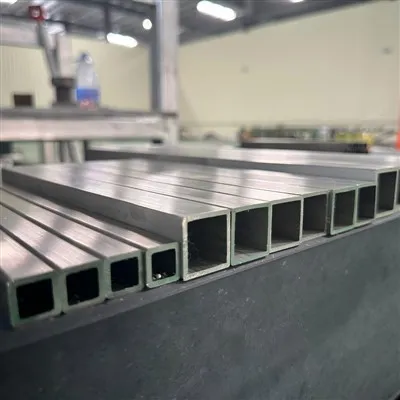
Don’t waste time guessing if your tubes will work in the cold. Reach out, tell me your project, and we’ll get you the right U-bend for your needs. No sales pitches, just straight talk from someone who’s been there.
Smooth Condenser Tube References:
- ASME Boiler and Pressure Vessel Code, Section II: Material Specifications.
- Stainless Steel Manufacturer’s Association (SSA) Austenitic Stainless Steel Properties Guide.
- International Organization for Standardization (ISO) 9001:2015 Quality Management System Standards for Metal Fabrication.
- NACE International Corrosion Control of Metals at Low Temperatures Report.
China Super Tech Co., Ltd.
As one of the most professional u-bend stainless steel tube manufacturers and suppliers in China, we’re featured by quality products and good service. Please rest assured to wholesale OEM u-bend stainless steel tube from our factory. Also, custom service is available.
Address: Wangjing Science and Technology Park, Guangshun North Street, Chaoyang District, Beijing
E-mail: sales@316liquidcooling.com
WebSite: https://www.316liquidcooling.com/
