If you’ve ever driven past a bridge that glows like a rusted sunset, or admired a garden sculpture that blends seamlessly into its surroundings, chances are you’ve encountered Corten steel. As someone who’s spent the last decade working as a Corten steel supplier, I get a ton of questions about this unique material—but none come up more often than, “How long does it take for Corten steel to patina?” It’s a fair question, too. The beautiful, earthy brown finish Corten is known for isn’t something that happens overnight, and it’s not the same for every project. Let’s break down the science behind that patina, the timeline you can expect, and what factors actually make a difference—especially if you’re working on a build that depends on that signature look. Corten Steel
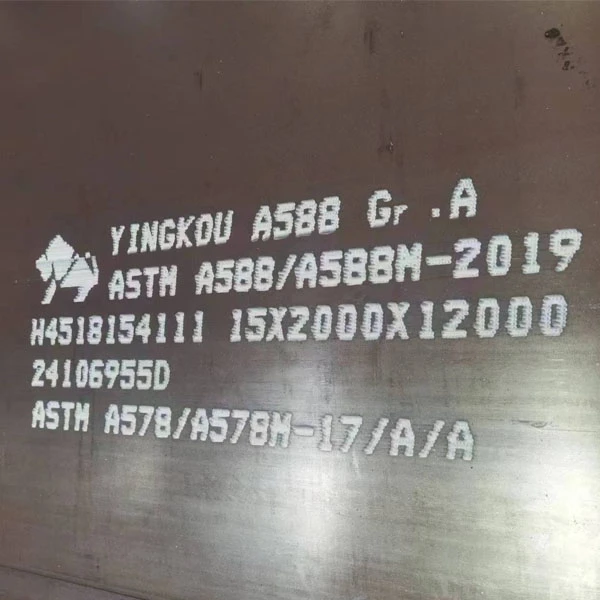
First, let’s get clear on what Corten steel is, because that’s key to understanding its patina. Officially called weathering steel, Corten is a group of steel alloys that include small amounts of copper, chromium, and nickel—elements that regular steel doesn’t have. Regular steel rusts and keeps rusting, right? It flakes, it pits, and it eventually eats through the metal. But Corten is designed to do the opposite: when it’s exposed to the elements, it forms a stable, protective oxide layer (that’s the patina) on its surface. Once that layer is fully set, it acts as a shield, stopping further corrosion. That’s why architects and landscape designers love it—no need for paint, no regular maintenance, just that rich, warm finish that gets better with age.
So, back to the timeline. Here’s the truth: there’s no one-size-fits-all answer to how long it takes for Corten to patina. But in general, the initial “surface rust” stage starts almost immediately after the steel is installed or exposed to moisture. That first stage is super important, because it’s the foundation for the stable patina. For most projects, you’ll start to see a visible color change—from the dull, dark gray of raw Corten to that characteristic rusty orange—in about 3 to 6 months. But that’s just the first step. The fully mature, stable patina— the deep, uniform brown that’s ready to protect the steel—usually takes 1 to 2 years, sometimes a little more. I’ve seen projects in coastal areas wrap up that mature patina in 10 months, while a covered urban plaza might take 18 months, just because of the weather and exposure.
Let’s talk about the factors that speed up or slow down this process, because that’s where most people get confused. The biggest one is weather—specifically, the balance of moisture and oxygen. Corten needs both to form that oxide layer. If you’re in a place that gets frequent rain and humidity (like the Pacific Northwest or the Southeast U.S.), the patina will form much faster. Rain keeps the surface wet, which lets the chemical reactions between the alloy elements and water/oxygen happen nonstop. But here’s the catch: it can’t be constantly soaked. If water sits on the surface for weeks without drying, you might get uneven rust, or even staining, instead of that smooth, uniform finish. On the flip side, arid regions (like the Southwest U.S.) with low humidity take way longer. In places where it only rains a few times a year, the steel only gets exposed to moisture occasionally, so the patina can take 2 to 3 years to fully mature. I had a client in Arizona who installed a Corten fence and still said it was looking “patchy” after 18 months—turns out, they needed to occasionally mist it lightly to keep the reaction going.
Next, exposure to the elements. Full, un sheltered exposure to sun, rain, and wind is ideal for a consistent patina. Wind helps blow away excess moisture so the surface dries evenly, and sun can speed up the oxidation process too. But if part of your Corten project is covered—like a beam under an overhang, or a planter that’s partially shaded—that area will patina much slower. I once worked on a commercial building with a Corten facade where a section was hidden by a neighboring awning for the first year. By the time we finished, the uncovered parts were deep brown, and the covered parts were still a dull gray, so we had to do a light surface treatment to match it. That’s a common mistake I see people make—they forget that not all parts of a structure get the same amount of exposure.
Another big factor is surface preparation before installation. When Corten leaves our warehouse, it’s raw mill finish—dark gray, smooth, and with a thin layer of oil or scale from manufacturing. How you prep it first makes a huge difference. If you leave the mill scale on, it can slow down the patina process, because the scale acts as a barrier between the alloy and the elements. Most of our clients choose to do a light power wash or a mild acid etch to remove that mill scale before installation. I always advise against sandblasting, though— it can leave too much of a rough surface, which leads to uneven rust streaks. For the most consistent patina, a gentle chemical treatment to remove the mill scale is best. We even offer pre-treated Corten for clients who want a head start—this has a thin oxide layer already, so it will start showing color within a few weeks of installation.
Pollution and air quality also play a role. Industrial areas with high levels of sulfur dioxide or nitrogen oxides, or urban areas with lots of car exhaust, can actually speed up the patina process. Those chemicals react with the moisture on the steel’s surface, making the oxidation reaction happen faster. But in some cases, that can lead to darker, almost blackish-brown patinas, instead of the classic rusty orange. On the other hand, rural areas with clean air might have a brighter, more orange patina that takes a little longer to set. I had a residential client in a small town in Ohio who was disappointed that their Corten mailbox was turning almost black after 6 months—turns out, the nearby factory’s emissions were speeding up the process. We adjusted their expectations, and by the end of the second year, it had mellowed into a deep, stable brown they loved.
Now, what about the “false patina” that some people worry about? A lot of new Corten owners think if they accelerate the patina process, they’ll mess up the final finish. There are commercial patina solutions you can spray on Corten to speed up the process, which is common for projects that need the finished look quickly—like a sculpture for an event, or a facade that has to be installed by a certain deadline. But I always tell clients to be careful with that. If you use a spray-on patina too early, it might not bond properly, and it can flake off in a year or two, ruining the whole effect. The best bet is to let the natural patina form on its own, especially for structural projects that need durability. The synthetic patina might look good at first, but it won’t last as long as the natural, stable oxide layer that forms over time.
Let me give you a real example from a project I worked on last year. It was a Corten retaining wall for a park in Seattle, which gets rain almost half the year. We installed it in early March, right as the rainy season was starting. By June, 3 months later, the steel had gone from gray to a light orange rust. By September, 6 months in, it was a mix of orange and brown, starting to look like it was settling in. We checked back in 12 months, and it was a deep, uniform brown with no flaking or pitting—exactly what the park client wanted. Now, 2 years later, it’s the most popular part of the park, with kids climbing on it and visitors taking photos. That’s the beauty of Corten—when you give it time to patina naturally, it becomes a permanent part of the landscape, not just a temporary structure.
Another example: a Corten planter for a client in Denver, which is dry, with less than 15 inches of rain a year. We installed it in April. By August, 4 months later, it was just starting to show a faint orange rust. By the end of the first year, it was only about half uniform—one side that got more morning sun and occasional watering was brown, while the shaded side was still gray. We advised the client to mist it once a week, and by the end of the second year, it was fully patinated. That’s a great example of how arid climates slow down the process, but with a little extra care, you can get that same great finish.
So, if you’re planning a Corten project, what does this mean for you? First, set realistic expectations. If you need the finished look by a certain date, natural patination might not be fast enough—talk to us about pre-treated Corten, which can cut the timeline down to a few weeks. Second, think about your project’s location. If it’s in a dry, shaded area, plan for 2 to 3 years for a full patina. If it’s in a rainy, well-ventilated area, you’ll be looking at 1 to 1.5 years. Third, skip the harsh treatments. Let the elements do their work, and resist the urge to scrub the steel during the patina process—you might rub off the developing oxide layer.
As a Corten supplier, I’ve seen too many people get frustrated because they think their Corten is “rusting wrong” or taking too long. But that’s just part of the process. The patina isn’t a flaw—it’s what makes Corten unique. It’s not like a paint job that you can touch up every few years; it’s a living finish that evolves with your project, blending into its surroundings and getting more beautiful as time goes on.
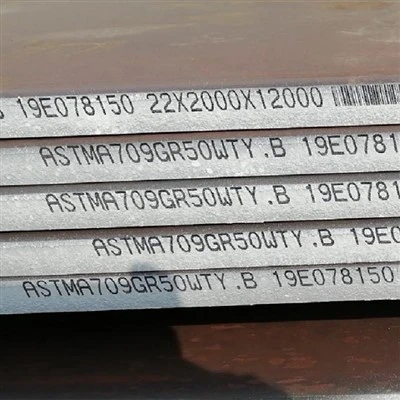
If you’re working on a project—big or small—whether it’s a facade, a fence, a sculpture, or planters, and you have questions about how long your Corten will take to patina, or what type of Corten is best for your location, feel free to reach out. We’ve worked on everything from small residential gardens to large commercial and public structures, and we can help you plan for the timeline and finish you want. Corten is a material that’s all about patience, and the results are worth the wait.
ASTM/ASME HSLA Steel Plate References
- ASM International. (2003). Weathering Steels: Properties and Applications. ASM Handbook, Volume 13A: Corrosion: Fundamentals, Testing, and Protection.
- Evans, U. R. (1999). The Corrosion and Oxidation of Metals: Scientific Principles and Practical Applications. Edward Arnold Publishers.
- ASTM A24/A24M – Standard Specification for Steel, Corrosion-Resistant, Structural (Weathering Steel). ASTM International.
- NACE International. (2016). Corrosion of Weathering Steels: A Guide to Understanding and Utilizing Patina Formation. NACE International Publication.
- British Standards Institution. (2018). BS EN 10025-5: Hot rolled products of structural steels – Part 5: Technical delivery conditions for weathering steels. BSI Standards.
Gnee Steel (Tianjin) Co., Ltd.
As one of the most professional corten steel manufacturers and suppliers in China, we also support customized service with low price. We warmly welcome you to buy high quality corten steel in stock here from our factory. If you have any enquiry about free sample, please feel free to email us.
Address: No.4-1114, Beichen Building, Beicang Town, Beichen District, Tianjin, China
E-mail: alloy@gneesteelgroup.com
WebSite: https://www.chinavesselplates.com/
