If you’ve ever bought an oil immersed transformer, chances are the sales pitch threw around “silicone oil” and “mineral oil” like they’re interchangeable. Let me stop you right there—they’re not. I’ve been in the transformer supply game for 12 years now, and I’ve seen way too many clients pick the wrong one because they didn’t get the difference. No stuffy textbook jargon here, just the straight talk I give every customer who walks through my door. Oil Immersed Transformer
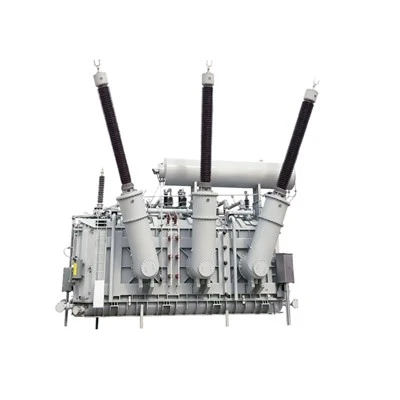
First, let’s start with the basics: both are insulators and coolants, right? Inside a transformer, those copper and steel coils get hot as hell when electricity flows through them. The oil soaks up that heat and carries it to the radiator fins, and also stops any stray electricity from jumping where it shouldn’t. But how they do that, and what they’re good for? Total night and day.
Let’s talk mineral oil first, since it’s the OG. It’s been the standard for like 100 years. Made from crude oil, processed to remove gunk that’d make it break down fast. Cheap as chips, easy to get your hands on. For most standard transformers—like the ones that power neighborhoods, small factories, regular office buildings—mineral oil works just fine. But here’s the catch: it’s flammable. Like, super flammable. If a transformer has a leak, or the insulation around the coils frays, that heat can ignite it. I’ve had clients in dense urban areas or hospitals, where a fire would be a disaster, tell me straight up “no mineral oil” because the risk’s too high. It also breaks down over time. Exposure to high heat, moisture, or even the tiny bits of metal that flake off from the coils will make it acidy, which eats away at the insulation. You have to test it every few years, filter it, sometimes replace it entirely. That adds up over the life of the transformer, especially if it’s in a hot climate.
Now silicone oil—my go-to for transformers in tough spots. It’s synthetic, made from silicon and oxygen, not crude. Way less flammable, like, it doesn’t even burn unless you heat it to over 600 degrees Fahrenheit. That’s a huge win for places where fire safety is non-negotiable: hospitals, data centers, offshore platforms, even areas with a lot of wildfire risk. It also handles heat way better. Silicone oil’s thermal stability is off the charts—can take temps up to 300 degrees without breaking down. No acid buildup, usually. So less testing, less maintenance. That’s a big deal for remote locations, where sending someone out to service a transformer every two years costs a fortune. But here’s the downside: it’s way pricier than mineral oil. Like, 3 to 4 times more. And it doesn’t transfer heat as well as mineral oil, so you need a slightly bigger transformer or more radiator fins to keep things cool. For a standard 500 kVA transformer powering a strip mall, that extra cost just isn’t worth it. But for a 10,000 kVA unit at a data center, the peace of mind from not having a fire is worth every penny.
Wait, let’s get into the gritty stuff people don’t talk about. Moisture. Mineral oil sucks at repelling moisture. If water gets in (say, from a leaky gasket or high humidity), it sinks to the bottom because water’s denser than mineral oil. That can cause arcing—sparks jumping where they shouldn’t, which ruins the coils. Silicone oil? Moisture floats on top, so it’s way easier to drain off. No arcing, no damage. That’s why silicone oil is the pick for transformers in tropical climates, where humidity is through the roof.
Another thing: environmental impact. Mineral oil is biodegradable, sort of? If it spills, microbes will break it down in a few months, right? But wait—mineral oil’s toxic to fish and plants while it’s in that crude-derived form. Silicone oil is basically non-toxic, spills break down even slower, but if you have a spill in a sensitive area, it’s way less harmful to wildlife than mineral oil. Just something to think about for clients near rivers, parks, or residential areas.
I’ve had a lot of clients come to me saying “silicone oil is better, so I want it for every transformer.” And I’m like, no, hold on. If you’re putting a transformer in a substation out in the countryside, where the fire risk is low and budget’s tight, mineral oil is the smarter call. It’s cheaper upfront, and the maintenance is easy enough. But if you’re putting it in a downtown high-rise where a fire could take out a whole block, or a wind farm in the middle of a forest, silicone oil is non-negotiable. I once had a client who installed mineral oil transformers at a remote solar farm out in Arizona—they kept having to filter the oil every year because of the heat, it was costing them twice as much as if they’d just sprung for silicone oil. They switched after two years, and their maintenance bills dropped by 70%.
Also, let’s not forget about compatibility. If you’re retrofitting an old transformer that’s been running on mineral oil, you can’t just dump silicone oil in there and go. They don’t mix well, and the leftover mineral oil will mess up silicone oil’s properties. You have to flush the whole unit first, which adds another cost. So if you’re modifying an existing transformer, mineral oil might be the only practical option.
What about lifespan? I’ve seen mineral oil transformers that run for 30 years with regular maintenance, and silicone oil ones that hit 40, no issues. But silicone oil’s lifespan is longer because it doesn’t break down. For a transformer that’s supposed to last 30 years, that means you might only replace the oil once, vs. mineral oil every 10 or 15. Again, that’s a long-term cost saving, but only if you can afford the initial pricetag.
Let me share a quick story—last year, a small factory owner came to me, panicking. His old transformer was 20 years old, running on mineral oil, and the insulation was failing. He wanted to replace it with silicone oil because he was worried about a fire that could take out his inventory. But his budget was tight. I told him, if he’s only running it for another 5 years before he expands, mineral oil is fine—just test it every year and keep an eye on it. But if he’s planning to be there for 15 more, spring for silicone oil. He went with the middle ground: a slightly higher-grade mineral oil with better fire-retardant additives, instead of straight silicone. It worked for him. That’s the thing—there’s no one-size-fits-all, and I try to fit the solution to the client, not push whatever makes me the most commission.
A lot of people ask me about other types, like ester oil, but that’s a whole other can of worms. We’re talking silicone vs. mineral here, so I’ll stick to that. The key takeaway is: mineral oil is cheap, common, works for most standard applications. Silicone oil is safer, more reliable in tough conditions, but way pricier.

If you’re in the market for an oil immersed transformer, don’t just go online and pick one based on price. Think about where it’s going, what it’s powering, and what your risk tolerance is. If you’re still not sure, hit me up. I can walk you through your options, no sales pressure, just straight up what’s gonna work for you. No gimmicks, no fake promises, just experience from years of dealing with transformers day in and day out.
Dry-type Transformer References:
- IEEE Standard for Mineral Oil Insulating Liquids for Transformers, IEEE Std C57.106-2015
- Silicone Fluids as Dielectric Coolants, Dow Corning Technical Bulletin 2020
- Thermal Performance of Insulating Oils for Power Transformers, Journal of Electrical Engineering, Vol. 68, No. 3, 2017
- Environmental Impact of Transformer Oil Spills, EPA Report 2019
- Maintenance Guidelines for Oil Immersed Transformers, International Electrotechnical Commission (IEC) 60422
Ruibian (Jiangsu) Electric Power Co., Ltd.
Ruibian (Jiangsu) Electric Power Co., Ltd. is one of the most professional oil immersed transformer manufacturers and suppliers in China, featured by quality products and good price. Please rest assured to buy durable oil immersed transformer in stock here from our factory. Contact us for pricelist.
Address: No. 69 Huayuan Avenue, Hai’an City,Jiangsu Province, China
E-mail: business@ruibianjiangsu.cn
WebSite: https://www.ruibianpower.com/
