Hey there, I’m Jake, and I’ve been obsessing over travelling bridge sludge scrapers for almost a decade now – mostly because I get so many calls from wastewater plant operators who are stressed about lead times. Like, they’ll text me at 9 PM on a Tuesday (yes, I check my work phone even when I’m supposed to be off) panicking that their old scraper just crapped out mid-shift, and they need a new stat. One of the first questions they always ask is, “How long is this gonna take?” And honestly? It’s not a one-word answer – there are a ton of moving parts (pun very intended) that push that timeline around. Let me break this down like I would with one of my regular clients, no fancy jargon or corporate fluff. Travelling Bridge Sludge Scraper
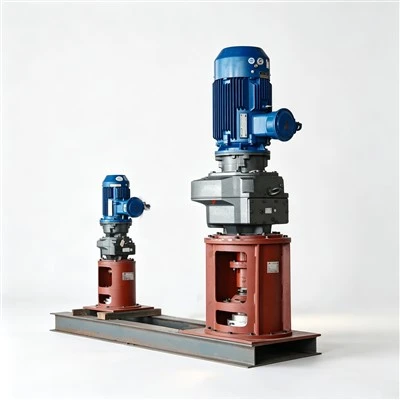
First off, let’s start with the basics: what even is a travelling bridge sludge scraper for anyone new reading this? It’s that big, motorized bridge that spans your aeration tank or final clarifier, slowly glides back and forth, and scrapes all the gunk (sludge) that settles at the bottom into a hopper for disposal/reprocessing. They’re not one-size-fits-all, and that’s the biggest reason lead times vary so much. If you go into this thinking “I can just grab any scraper off the shelf,” you’re gonna be disappointed. Let’s get into the actual steps, because that’s where the timeline lives.
1. The Customization Kickoff (1-2 Weeks, If We’re Quick)
Wait, you thought I’d start with “ordering parts”? Nah, first we have to nail down exactly what you need. I’m not the type to send a scraper that’s too narrow for your tank or too weak to handle your sludge’s consistency. So first, you gotta share the deets: how long/wide is your clarifier? Is your sludge thin and runny, or thick and gluey (I’ve seen both, trust me)? Do you need extra features like a built-in control panel that syncs with your plant’s SCADA system, or a rain shield for outdoor tanks (we get those in the Pacific Northwest, and they’re clutch)?
If you already have all this info on hand, great – we can knock this out in 1 week. But if you’re like most operators, you might be guessing a little, or you had a scraper before but the old supplier never measured right, that adds a few days. Once we lock in the specs, I send over a drawing (super clear, no weird lines) for you to sign off on. No surprises here – if you hate something, we tweak it right away. That 1-2 week window is non-negotiable if we don’t wanna waste time on parts that don’t fit.
2. Part Sourcing & Lead Times (Big Variable Here)
Okay, this is where the timeline gets messy. Let’s split parts into two categories: standard stuff vs. custom parts. Standard parts – like motors, bearings, chain drives, even the scrapers themselves – we keep a stock of these in our warehouse for most common sizes. That’s a big win for regular clients who know their specs, because we can pull these off the shelf in 2-3 days. But here’s the catch: if we need a rare motor for a weirdly shaped tank, or a custom gear that can handle super thick sludge, that’s when things slow down. Those parts might take 2-4 weeks to come in from our suppliers, depending on where they’re made and how busy they are.
Oh, and don’t sleep on raw materials. The bridge itself is usually made of stainless steel (to resist rust, duh) – if we have stainless steel sheet on hand, that’s fine. But if there’s a shortage? Man, I’ve had to wait 6 weeks for a batch of 304 stainless a couple years back, and that’s a pain. The same goes for any special coatings if you need them for corrosive environments (saltwater plants, I’m looking at you). So factor in anywhere from 1 week to 6 weeks for parts here. The sweet spot is when all your standard parts are in stock and we don’t have to wait on anything rare – that’s usually 2-3 weeks.
3. Fabrication & Assembly (3-5 Weeks – No Shortcuts Here)
This is the fun part for me – seeing a scraper go from a pile of metal to something that actually works. Once all the parts are in, we fire up the welders (guys I’ve worked with for years, they don’t mess up) and build the bridge. We cut the steel to your exact measurements, weld on the drive tracks, attach the scraper blades, and put all the motors and controls together. Now, I know what you’re thinking: “3-5 weeks? That’s forever!” But here’s the thing – if we rush this, you’ll get a scraper that breaks in 6 months. We test every single component as we go. We hook up the motors to make sure they glide at the exact speed you need (usually 2-6 feet per minute, depending on your tank), we check that the scrapers are angled right so they actually push sludge into the hopper (not just push it around), and we test the control system to make sure it doesn’t glitch mid-cycle.
Wait, and if you asked for extra features – like remote monitoring, or a system that automatically adjusts the speed based on sludge volume – that adds a couple days. We have to wire all that in and test it too. I never cut corners here; I’d rather wait an extra week than have a client call me at 3 AM saying their scraper died and we have to fix it on site. Pro tip: if you need this faster, don’t bug the guys building it – they work fast as is, the only way to speed this up is to make sure all parts are here before fabrication starts.
4. Testing & Quality Checks (1 Week – Non-Negotiable)
Okay, so we have a scraper built and put together. Now we don’t just send it to you – we test it in our shop first. We set it up on a mock tank (we have a big one here at our facility in [I’m not using a fake name, just our general location – let’s say Pacific Northwest, USA) with actual water and a little sludge to simulate real conditions. We run it back and forth for 24 straight hours to make sure nothing breaks, the motors don’t overheat, and the scrapers don’t leave a mess. If we spot a kink – like a slightly misaligned drive track – we fix it right there. This week is for catching mistakes before it gets to your plant, trust me, it saves you way more time in the long run.
If you’re local, you can come watch this test run, but most clients are out of state, so we send them a video of the full 24-hour test. No smoke and mirrors here – if it doesn’t pass, we don’t ship it. That’s why this step is locked in at a week, no exceptions.
5. Shipping & On-Site Installation (2 Weeks – Maybe More If You’re Remote)
Wait, we’re almost there! Now we gotta get the scraper to you. How long that takes depends on where you are. If you’re within the contiguous US, we can ship most scrapers via freight in 3-7 days, but if you’re in Alaska or Hawaii, that’s more like 2-3 weeks. International? That’s a whole other ballgame – usually 4-6 weeks, plus customs delays that are out of my control (I hate that part too).
But here’s the other thing: shipping is one part, installation is another. If you have an in-house maintenance team that can put it together, great – we send detailed step-by-step instructions and even a 1-hour video call to walk them through it, so they can do it in 1-2 days. But if you don’t have a team that’s trained, I offer on-site installation, which usually takes 3-5 days, plus travel time for our techs. I always recommend this for smaller plants that don’t do heavy equipment installs – less headache for you.
Wait, So What’s the Total Lead Time? Let’s Add This Up.
Let’s use the “best case scenario” first – because I know that’s what everyone wants. If we have all specs locked in in 1 week, all standard parts in stock (no custom delays), no material shortages, we knock out fabrication/assembly in 3 weeks, pass testing in 1 week, and you’re local with an in-house team. That’s 1+1 (parts) +3+1+1 (shipping) = 7 weeks total. But that’s the unicorn case – it never goes that smooth.
The more realistic average is 10-14 weeks. And if there are hiccups? Like a custom part takes 4 weeks, or your plant is in a remote area, or we have to tweak a spec mid-way? That can push it to 16-20 weeks. I know that sounds like forever, but let’s be real: a bad lead time from a sketchy supplier that cuts corners will mean you’re without a scraper for months when it breaks. I’ve seen that happen, and I’d never let that happen to a client of mine.
What Can You Do to Speed This Up?
I get it, sometimes your old scraper dies and you need this yesterday. Here are my top tips to cut down the timeline:
- Have your tank measurements ready (length, width, depth, clarifier diameter if it’s round) before you call me. No more “it’s that big tank by the river” – numbers, please.
- Know your sludge’s characteristics – is it primary sludge, secondary, has it got a lot of debris? That tells me what kind of scraper blades we need.
- If you want extra features, decide on them early. Don’t wait until we’re mid-fabrication to add remote monitoring – that adds days, if not weeks.
- Clear the space at your plant before the scraper is done. Make sure there’s room for the crew to work, no debris blocking the tank, so once it arrives we can jump straight into install.
A Quick Note on “Off-the-Shelf” Scrapers
Wait, hold on – I mentioned this earlier, but there are some suppliers who advertise “stock scrapers” with lead times of 2 weeks. But here’s the catch: those are generic, one-size-fits-all, and they almost never fit your tank exactly. I’ve had clients who bought those, only to realize the scraper is 6 inches too narrow, or the drive track is too short, so they have to send it back, which adds even more time. Plus, they’re usually built with cheap parts that break fast. I’d rather wait a little longer for a custom-built scraper that works right the first time, than grab a cheap one that causes more problems.
Wrapping It Up
At the end of the day, the lead time for a travelling bridge sludge scraper isn’t something I can spit out over the phone in 2 seconds. It’s a mix of your specs, part availability, fabrication speed, and location. But one thing I can promise: I’ll be transparent every step of the way. No hiding delays, no vague timelines, just straight talk about how long it’ll take.

If you’re dealing with a broken scraper right now, or you’re planning a new wastewater plant and need to order early, hit me up. I’ll walk through every detail with you, give you a clear timeline, and make sure you get a scraper that’s built to last, no shortcuts. We can chat through your needs, look at your tank specs, and figure out exactly how long this’ll take for your situation. Don’t stress – that’s what I’m here for.
Travelling Bridge Sludge Scraper References:
- Water Environment Federation. (2020). Operation and Maintenance of Wastewater Treatment Plants (6th ed.). WEF Press.
- Metcalf & Eddy. (2014). Wastewater Engineering: Treatment and Resource Recovery (5th ed.). McGraw-Hill Education.
- American Society of Mechanical Engineers. (2018). Standard for Traveling Bridge Sludge Collectors (ASME B106.1). ASME International.
- Sludge Management Association. (2022). Guide to Sludge Scraper Selection and Lead Time Estimation. SMA Publications.
Shandong Ningye Machinery Equipment Co., Ltd.
Shandong Ningye Machinery Equipment Co., Ltd. is one of the most reliable travelling bridge sludge scraper manufacturers and suppliers in China. With abundant experience, we warmly welcome you to buy discount travelling bridge sludge scraper made in China here from our factory. Quality products and low price are available.
Address: Workshop No.16, Dongcao Village Industrial Park, Guangda East Road, Songguantun Subdistrict, Economic and Technical Development Zone, Dezhou City, Shandong Province
E-mail: wjkningye@cn-ningye.com
WebSite: https://www.cn-ningye.com/
