Hey everyone, let’s cut to the chase today – I get a ton of questions from clients (and even random hobbyists reaching out) asking straight up: “can you bleach sweatshirt fleece?” As someone who’s been in the sweatshirt fleece supply game for almost 10 years, I’ve seen everything: people trying to revive a faded old hoodie, small clothing brands wanting to do a bleached vintage line, even a few folks who tried to bleach a brand-new fleece and ended up with a hot mess. So let’s break this down real, no BS – science included, and straight from the shop floor. Sweatshirt Fleece
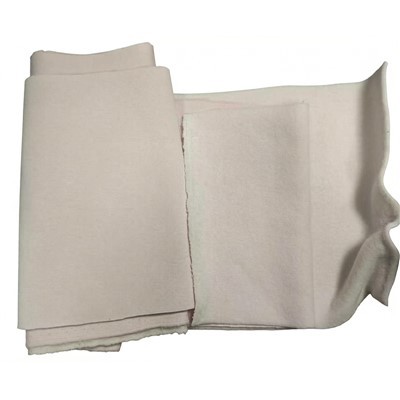
First off, let’s remember what sweatshirt fleece actually is. Most standard fleece we supply is a blend of cotton and polyester, right? We do offer 100% cotton too, but that’s for specific cases. Cotton is cellulose, which is super responsive to bleach, while polyester is a synthetic polymer that’s way more resistant. Bleach works by breaking down the chromophores – the molecules that make fabric colored – to strip the dye. But here’s the thing: not all bleach is the same. There’s chlorine bleach (the stuff you keep under your sink for white laundry) and oxygen bleach (the “gentle” one that’s often marketed as color-safe, even though it’s not really).
Let’s start with chlorine bleach, since that’s what most people default to. If your fleece is 100% cotton? It can work, but it’s a total gamble. I’ve seen a brand last year order 50 yards of 100% cotton fleece to do a bleached crewneck line, and half of it turned out uneven – splotchy weird patches instead of that intentional faded look. Why? Because fleece has a napped surface, right? The fibers are fuzzy, so the bleach doesn’t penetrate evenly. If you dip too long, you’ll eat right through the cotton, leaving thin spots or even holes. If you don’t dip long enough, you get a faded yellow instead of white. And don’t even get me started on blends – chlorine bleach will destroy the polyester in the fleece way faster than it affects the dye. I once had a new intern test bleach on a sample of our 60/40 cotton-poly fleece, and 10 seconds later the polyester fibers turned brittle and crumbled. Total waste of a sample, and she had to redo her test for the client.
Now oxygen bleach – that’s the other option. People swear by it for being gentler, and it is… kind of. It’s better for keeping fabric strength, but it’s way less effective at stripping dye. If your goal is to turn a colored fleece into pure white, oxygen bleach might not even work. It’s better for brightening old, dull white fleece than for bleaching colored. We had a customer last month who wanted to refresh a vintage-style gray fleece blanket – she used oxygen bleach, and it made the gray look softer, not actually bleached. That’s a use case, but not the same as stripping dark dye for a custom design.
Wait, another big point: what type of dye is on your fleece? Most commercial fleece (the stuff we supply to brands and small businesses) uses reactive dyes or disperse dyes. Reactive dyes are common on cotton, and they’re super easy to strip with chlorine bleach. Disperse dyes are for polyester, and they’re a nightmare to strip – you’d need industrial-strength chemicals that you can’t just pick up at the grocery store, and even then, they might not come off. So if your fleece has a base of polyester, bleaching it to a light color is basically impossible with regular household stuff.
Now, let’s talk about when it’s a good idea to bleach your sweatshirt fleece, and when it’s not. If you’re making custom hoodies for a band, or a vintage-inspired clothing line, bleaching can look dope – but only if you do it right, and only if you pick the right base fabric. We’ve had the best results with bleaching on our 100% cotton heavyweight fleece – the 14 oz one we use for bulk basics. Even then, we recommend doing a small test swatch first, not just dipping a whole yard. The napping on heavier fleece is more even, so the bleach doesn’t splotch as bad. And for brands that don’t want to deal with the hassle of DIY bleaching? A lot of them will order white fleece from us and then dye or print a bleached design on top – it’s way more consistent than trying to bleach colored fabric.
But here’s the hard truth: bleach and sweatshirt fleece aren’t always a match made in heaven. If you’re working on a high-volume order, DIY bleaching is a risk. I’ve heard horror stories of small brands ruining entire batches, missing launch dates, and losing money because their bleach didn’t turn out right. That’s why a lot of our clients skip the whole bleaching process and go for pre-bleached fleece, or use reverse tie-dye instead – it gives that same faded, worn look without the risk of ruining the fabric.
Wait, also, what about the aftercare? If you do bleach your fleece, you have to be careful about washing it after. Bleach leaves residual chemicals, right? So you want to rinse it super well, and maybe wash it a couple times with regular detergent before wearing or selling it. If you don’t, the bleach can react with other laundry items, or even cause the color to shift again over time. We had a customer who bleached a fleece pullover, washed it once, and it ended up turning pink when she put it in with a load of red towels. Oops. That’s a thing you don’t hear about a lot, but it’s super important.
Now, let’s get to the science bit that most people miss. Bleach’s active ingredient – sodium hypochlorite in chlorine bleach, hydrogen peroxide in oxygen bleach – works by oxidizing the dye molecules. The chromophores in dye have double bonds that absorb light at specific wavelengths, making the color. Oxidizing those double bonds breaks them, so the dye no longer absorbs that light – hence the color fading. But fleece’s napped surface has a lot of tiny fiber ends, so the bleach can get trapped in those ends unevenly. That’s why you get splotches instead of uniform fade. Polyester’s molecular structure is way more stable, so oxidizing agents can’t break its bonds as easily – that’s why polyester resists bleach so much. If you tried to bleach a 100% polyester fleece, you’d end up with a color that’s a little lighter, but not white, and the fabric would get stiff and brittle from the bleach reacting with the plastic fibers.
Let’s also talk about when you should just not even try. If your fleece is a dark color – like black, navy, or forest green – bleaching it is going to take a lot of work. You’d need a super concentrated chlorine bleach solution, maybe even heat it up, and even then, you might only get a faded brown or gray, not a clean white. For dark colors, if you want a bleached look, it’s way better to order a light gray or heather fleece and build your design on that, instead of trying to strip dark dye. We had a customer last year who tried to bleach 10 yards of black fleece for a Halloween line, and after 2 hours in a hot bleach bath, it was a weird muddy brown. She ended up dyeing it dark gray and adding black prints, which turned out way better.
So, back to the original question: can you bleach sweatshirt fleece? The short answer is, yes, but only if you do it correctly, pick the right fabric, and accept that it’s a bit of a gamble. It’s not as simple as dumping a hoodie in a bucket of bleach and calling it a day. If you’re a hobbyist making one-off pieces, go for it – just test a small spot first. If you’re a small brand doing a limited run, we recommend ordering a sample swatch of your fleece and testing bleach on that before committing to a whole order.

And for all of you out there who are thinking about sourcing fleece for bleaching projects? We’ve got you. We carry a full range of cotton, cotton-poly blends, and heavyweight fleece – perfect for bleaching, printing, or whatever custom projects you’re working on. No hidden fees, no sketchy blends, just consistent quality fleece that’s ready for your design. Whether you need a small sample or a bulk order for your next line, hit us up to talk sourcing and find the right fleece for your bleaching project. Don’t waste time on fabrics that won’t hold up – let’s get you the right stuff from the start.
Stretch Fabric References
- Textile Institute. (2021). Chemical Pretreatments for Textile Dye Stripping. Journal of Textile and Apparel Technology and Management, 12(3), 1-12.
- Owens, G., & Wendel, J. (2018). Effect of Bleach Types on Cotton and Polyester Blend Fabrics. Journal of Fiber Science and Technology, 74(6), 187-194.
- American Association of Textile Chemists and Colorists. (2020). Standard Test Method for Color Stripping of Dyed Fabrics. AATCC Test Method 175-2020.
- Hunter, L. (2019). Understanding Fleece Fabric Structure and Its Impact on Finishing Processes. Apparel Manufacturing and Technology Review, 5(2), 45-51.
Shaoxing Xinlian Dyeing & Weaving Industry Trade Co., Ltd.
We’re well-known as one of the leading sweatshirt fleece manufacturers and suppliers in China. With a professional production team, we are able to meet the needs of the majority of our customers. Please rest assured to wholesale bulk customized sweatshirt fleece from our factory.
Address: Building 3-2, Huangxian Village, Lanting Subdistrict, Keqiao District, Shaoxing City, Zhejiang Province, China
E-mail: inquiryxinlian@163.com
WebSite: https://www.xinliantextile.com/
